


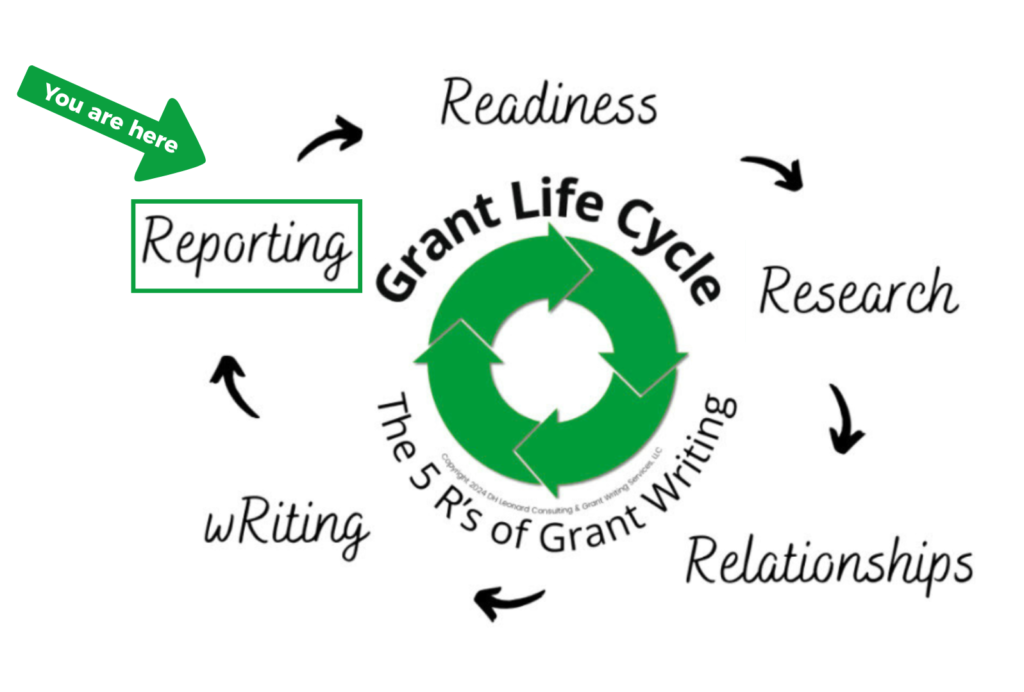
Congratulations! You were awarded a grant! Now comes the fun part – program implementation and grants management. Let’s check where you are in the Grant Life Cycle.
Grants Management and Administration
Grants management done well can lead to renewed funding and new grants. Good grants management depends on creating and maintaining effective systems that allow you to accurately and efficiently track outcomes, activities, and finances so you can build long lasting credibility with a funder.
Most grants involve a good amount of administrative work to fulfill the requirements of granting agencies and funders. This includes tracking grant program expenditures as well as work accomplished (like outputs and milestones) and impact (outcomes), conducting evaluations, fulfilling grant reporting requirements, and submitting renewal requests.
Grant Award and Start-Up Process
Grants management and administration are a team effort requiring strong internal and external communication practices, as well as established systems, processes and tools that keep the team and project on track. Responsible team members will include staff from programs, grants and finance.
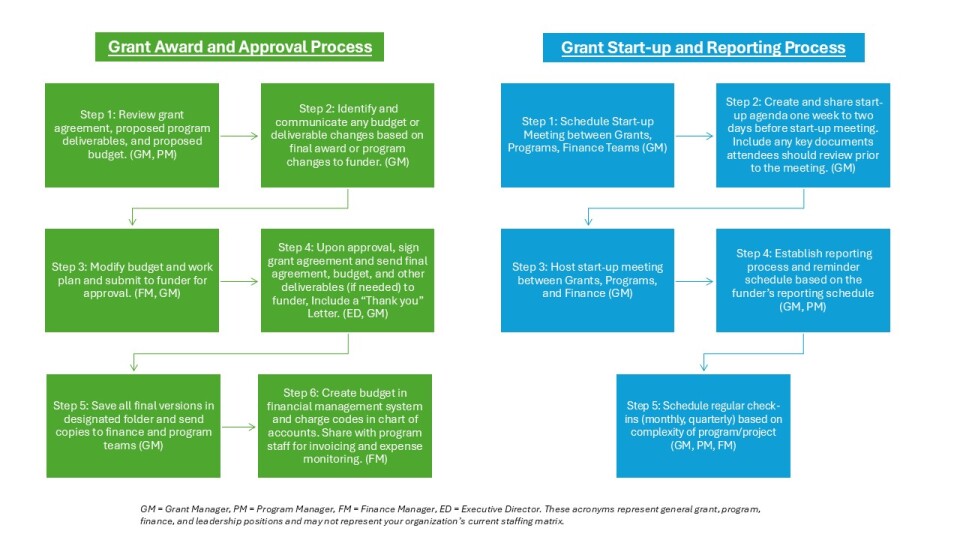
The following workflows offer recommended high-level steps for the grant award and start-up process.
Grant Award and Start-Up Workflow Steps
Downloadable Resources
Grant Tracking and Reporting
Funders require grantees to report on how awarded funds were used. Most funders will provide a grant report form with a set of narrative questions and required financial documents. Just like an application, the report format can vary depending on the funder. Submission may be through an online portal, an email or a hard copy submitted by mail.
Now that you have been awarded a grant, you will need to record when reports and renewal requests are due. Your grant calendar is the perfect tool to track these dates. As soon as you receive the grant award agreement, review the reporting requirements, including when and how to report, and record this information in the grant calendar.
Pro Tip: Also add due dates to your internal work calendar and send calendar invites to your team members so they have due dates on their calendar as well. Include dates for when the report is due to the funder AND internal deadlines for getting information to you in order to draft the report.
Guides for Reference: The following resource from Philanthropy DMV offers an overview of the types of questions and attachments required for a general support grant report.
In your application you proposed a set of indicators (outcomes and outputs) you would track along with activities. The grant agreement or report format should help you determine which metrics you should track, and which questions you need to keep in mind as you implement the award.
Questions to consider during the start-up phase:
- How will you track proposed indicators or metrics across your grant?
- Do you need to create a spreadsheet to track deliverables?
- Do you need to invest in project management tools? Does your union or 501(c)(3) already have a project management tool or system? Can this tool be adapted to track grant deliverables?
Funders may ask you to provide copies of policies or procedures during the start-up phase of the grant or during a compliance site visit. Once again, this is when your efforts to Get Grant Ready! should pay off.
Federal Grant Changes
In 2024, the Office of Management and Budget (OMB) completed updates to the Uniform Guidance (2 CFR 200). However, the current Administration is recommending further updates. See the 2024 crosswalk of changes below and a link to the National Grant Management Association’s (NGMA) update page. To keep up to date, we recommend you sign up for emails from NGMA.
Resources
Grants Management Training and Resources
The following professional consultants and associations offer best practices on grants management and administration, professional development training and conferences, and resources for staff serving as grants administrators or performing different grants management roles.
*Annual memberships to these fundraising and grant program resource sites allow you to gain access to more robust trainings for free or reduced prices in addition to the online resources mentioned in the Research and Outreach and Proposal Writing and Development Sections.

Contact Us
We are here for you!
Please contact us if you have a question, concern, or request regarding workforce development.
research@afscme.org